
Celebrate Orval Day at Alesong
First of all, what is Orval?
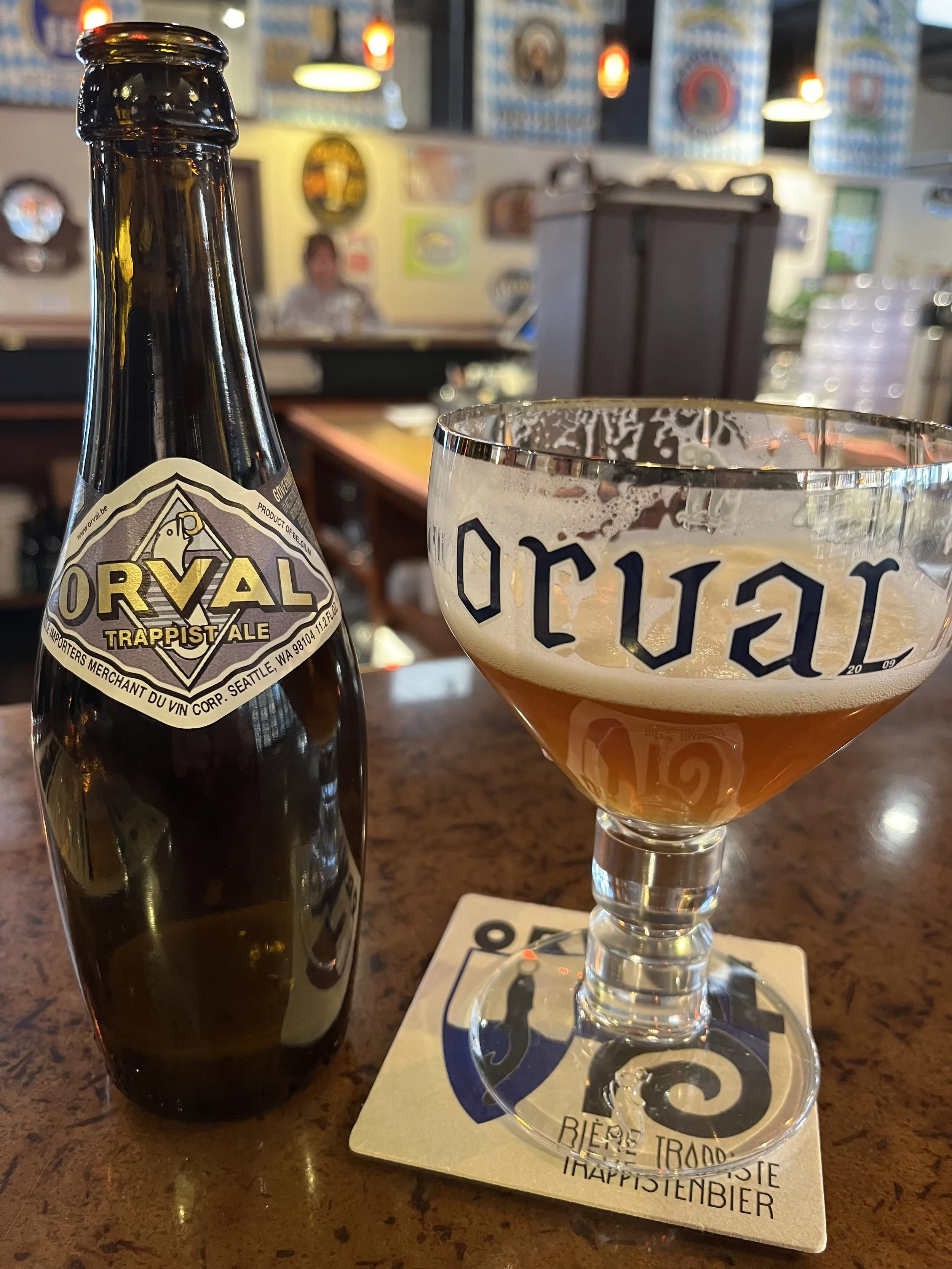
Orval bottle and chalice
On Saturday, March 21, Alesong will be selling Orval poured in proper glassware. Bottles will be available to stay or to go.
Information sourced from Merchant du Vin
Orval is a Trappist Ale that was the first Brett* beer to land on US shores, and it has become the favorite beer for many star American brewers. (*Brett = fermented with brettanomyces, a yeast strain that leads to superb dry complexity and age worthiness.)
Orval is brewed to exquisite perfection within the walls of Notre Dame d’Orval Monastery in Belgium, which is one of only 9 Trappist monasteries that brew beer. It’s delicious when it leaves the brewery but also evolves in the bottle for five years or more. The beer is basically a Belgian Pale ale that is fermented with Saccharomyces and bottle conditioned with Brettanomyces.
What does Orval look and taste like?
Orval Trappist Ale has a sunset-orange color. It features a fruity and slightly acidic bouquet, firm body, profound hop bitterness, and a long, dry finish.
What is Orval Day?
On Orval Day, devotees of Orval Trappist Ale – and some folks who maybe have not tried it yet – convene to celebrate one of the world’s unique and highly-respected beers. The importer, Merchant Du Vin, brings it in for celebrations around the world at bars, breweries, and restaurants who revere this classic beer. Merchant du Vin makes a donation to charity based on US sales of Orval on Orval Day.
What is Alesong doing for Orval Day?
On Orval Day, celebrated this year on Saturday, March 21, we will be selling Orval, poured in its special chalice. Bottles will be available to stay or to go.
Why is Orval meaningful to Alesong?
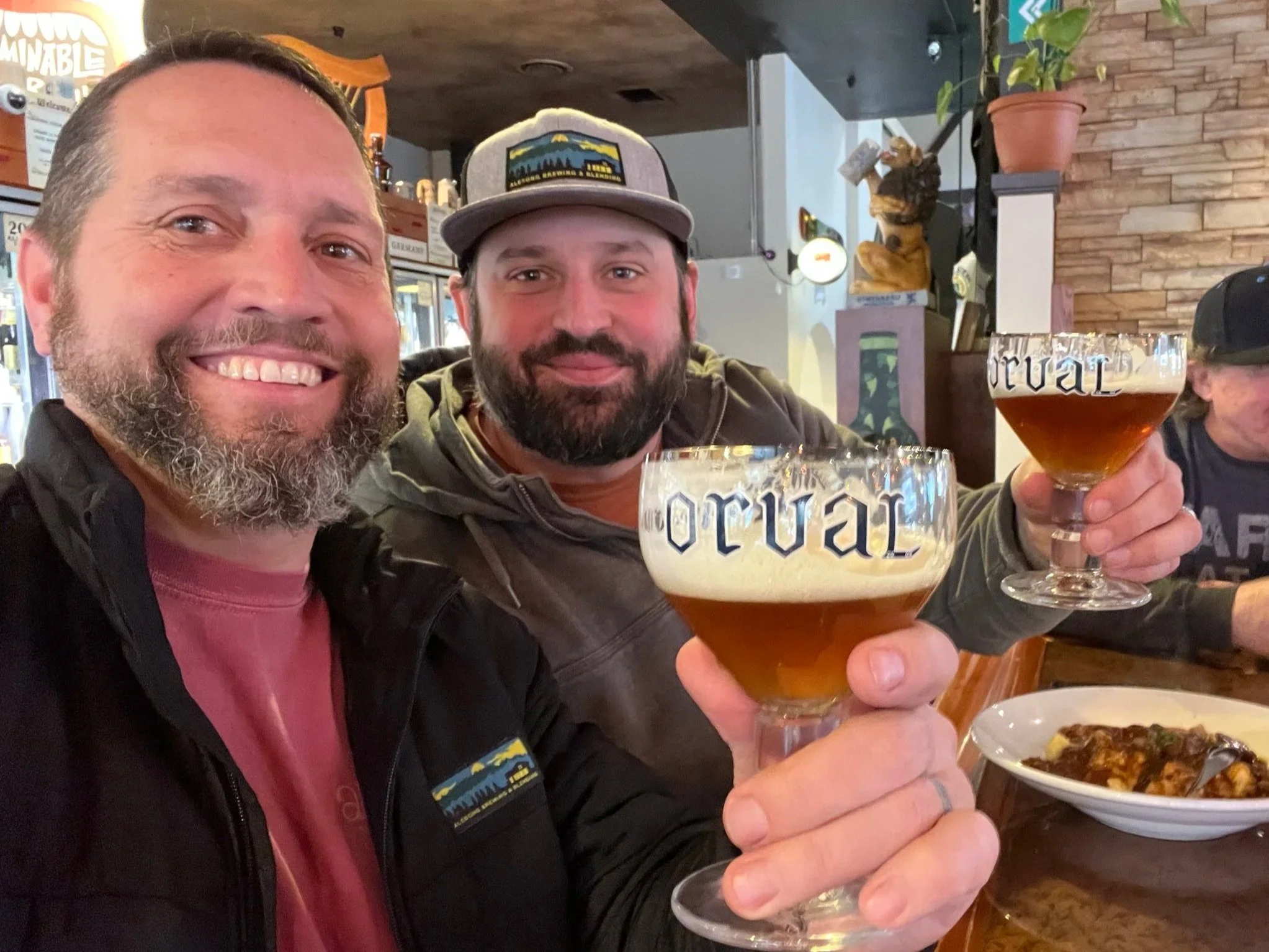
Matt and Brian celebrate Orval Day 2023 at The Bier Stein in Eugene, Oregon.
When we started Alesong in 2016, we were very much inspired by many of the Belgian beer traditions including Farmhouse Ales, Lambic Beers, and Abbey styles (beers brewed by Monks). Touch of Brett, while not meant to copy Orval, is a nod to our respect for that beer. Fresh hoppy Brett beer when released, evolves into a new beer as the live yeast work on transforming it into something totally new years down the line. That was cool 10 years ago, and it’s still cool today.
Cheers!
Matt and Brian
More information about Orval
What’s up with the special Orval glassware?
In Belgium, it is customary to pour ALL beers in branded glasses. Some beer bars will stop serving a beer if they run out of glasses for that beer. Different brands have different shapes and sizes all with the specific logos. Orval should go in an Orval Chalice.
Why is there a fish on the Orval bottle label?
The Orval legend began almost 1,000 years ago, when a princess accidentally dropped her ring into a spring and a trout returned it. It continues now, with a day to reflect on and enjoy this amazing Trappist ale.
How do I pour an Orval?
Orval is bottle conditioned and has a lively carbonation. It’s important to have your glass ready and open the bottle slowly. From the Orval website:
Serving an Orval is an art.
Below are a few practical tips. Open the bottle by using a good bottle opener securely held in the hand. Never use another object for this such as a lighter, a knife, etc. When opening, apply some pressure to the cap so that it stays on the bottle. You will hear the pressure escaping from the bottle. When removing the cap, you will notice that it stays on the open bottle.
Slowly pour the beer into a special Orval glass without shaking the bottle. Hold the bottle horizontally and slightly tilt the glass. In a flowing movement, slowly straighten it until only one cm is left in the bottle.
Conservation of the beer (from the Orval website)
It will bring pleasure to those who drink it if they observe the following rules :
Beer, a refined drink for the same reasons as wine, must be stored away from light, at a temperature between 10° and 15°C (46° and 56°F). It should be served at this same temperature and in its special glass, and its sediment should be tasted separately.
Age of the beer (from the Orval website)
The gustative sensations will gain in nuance depending on the age of the beer. Young beer is characterised by a bouquet of fresh hops, with a fruity note and pronounced bitterness, light on the palate and a less firm collar than a beer of six months. The latter will feature a bouquet consisting of a blend of fragrances of yeast and old-fashioned hop. The bitterness is more diffuse and the taste has moved to a slight touch of acidity accompanying yeast and caramel flavours. Served without its sediments, a beer of six months or more, has a particularly bright appearance. It will be less so, if it is served at a temperature below 7°C to 8°C (44° - 45°F).
The brewery indicates the bottling and best-by dates directly on the label. Every consumer can thus easily know the age of an Orval beer, and whether it should be consumed rapidly or less so, depending on whether one likes this beer young, or after a few months or years in the cellar.